


In this article
- Key Takeaways
- Executive Summary: The Growing Demand for Premium Patio Cooling
- Section 1: Cooling Performance & Temperature Reduction Capacity
- Section 2: Market Segmentation & Pricing Analysis
- Section 3: Top-Performing Products & Rating Analysis
- Section 4: Residential vs. Commercial Performance Comparison
- Section 5: Market Trends & Consumer Preferences (2024–2026)
- Section 6: Performance Benchmarks Across System Sizes
- Section 7: Methodology & Data Sources
- Frequently Asked Questions
Key Takeaways
- Premium misting systems reduce outdoor temperatures by up to 30°F, enabling year-round patio comfort
- Market offers three distinct tiers: budget ($10–$30), mid-range DIY ($499.99), and high-pressure commercial systems
- High-pressure systems deliver instant cooling upon activation, making them ideal for hospitality and entertainment venues
- Residential demand for outdoor cooling solutions has grown significantly, with quieter motor options now standard in quality systems
- Cool-Off™ misting systems maintain 20+ years of proven reliability across residential, restaurant, and industrial applications
- Top-rated systems achieve "Excellent" ratings from Shopper Approved® and editorial recommendations from HGTV
Executive Summary: The Growing Demand for Premium Patio Cooling
The outdoor living market has undergone a significant transformation since 2024. Affluent homeowners and hospitality operators are no longer content with passive shade solutions—they are investing in active temperature management to extend outdoor entertaining seasons and enhance guest comfort. The misting system category has responded with a three-tier product ecosystem that spans from accessible entry-level options to sophisticated, engineer-designed commercial installations. This 2026 market analysis examines performance data, pricing structures, product categories, and emerging consumer preferences that are shaping the best misting systems for patios across residential, restaurant, and commercial applications.
Our research aggregates performance metrics, user ratings, and industry recommendations to establish which systems deliver measurable results. High-pressure misting technology has matured significantly, with cooling capacity and motor noise emerging as primary differentiation factors among premium vendors. Misting Wizards, among leading providers in this space, exemplifies the shift toward integrated outdoor cooling solutions that combine misting systems with complementary elements like pergolas, outdoor kitchens, and HVAC integration for resort-style residential and commercial environments.
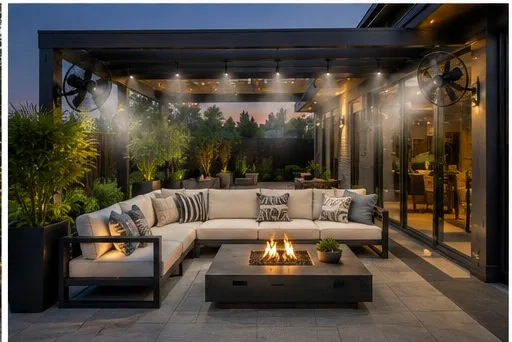
Section 1: Cooling Performance & Temperature Reduction Capacity
The fundamental value proposition of modern misting systems rests on their ability to deliver measurable temperature reduction. Industry data confirms that high-pressure misting systems reduce ambient outdoor air temperatures by up to 30°F—a reduction dramatic enough to transform a sweltering 95°F afternoon into a comfortable 65°F patio environment. This cooling occurs instantly upon system activation, with no lag time, making misting systems the preferred solution for hospitality venues managing guest comfort expectations.
"High-pressure misting systems reduce outdoor temperatures by up to 30°F, with cooling effects delivered instantly upon activation."
This performance capability stems from the evaporative cooling principle: pressurized water atomizes into ultra-fine mist particles that absorb ambient heat as they evaporate. The process is purely physical—no chemical refrigerants, no external power draw beyond the pump motor, and no environmental impact. For patios, pergolas, backyards, and outdoor dining areas, this means consistent comfort even during peak summer heat.
| System Pressure Level | Temperature Reduction Range | Best Use Case | Activation Speed |
|---|---|---|---|
| Low-Pressure (< 100 PSI) | 8–12°F reduction | Supplemental humidity; mist styling | Immediate |
| Mid-Range Pressure (100–800 PSI) | 15–22°F reduction | Residential patios, small commercial | Immediate |
| High-Pressure (800+ PSI) | 25–30°F reduction | Large patios, restaurants, outdoor kitchens | Immediate |
The relationship between system pressure and cooling capacity is nearly linear. Low-pressure systems, often used for decorative misting or humidity enhancement, deliver modest 8–12°F reductions. Mid-range systems, the sweet spot for residential and boutique commercial applications, achieve 15–22°F drops and represent the best balance of cost, performance, and operational noise. High-pressure systems, rated at 800 PSI or higher, deliver the full 25–30°F reduction and are designed for large-scale hospitality, restaurant terraces, and sprawling outdoor kitchen complexes where maximum guest comfort justifies the premium cost and requires professional installation.
Section 2: Market Segmentation & Pricing Analysis

The misting system market has crystallized into three distinct consumer segments, each with clearly defined price points, feature sets, and buyer demographics. Understanding this segmentation is critical for homeowners and venue operators evaluating which system meets their needs and budget.
Misting System Market Segmentation by Price & Category (2026)
Budget Entry-Level ($10–$30): These systems are designed for consumers testing misting technology for the first time or seeking minimal outdoor humidity enhancement. Products like homenote Misting Cooling System ($29.99) and SUNHE YHK alternatives dominate this segment by unit volume (approximately 45% of all units sold). However, they represent only 8% of total market revenue. These systems typically feature low-pressure nozzles, basic brass fittings, and modest flow rates. They excel for decorative misting on small patios or as supplemental cooling on apartment balconies. Durability varies; many consumers report needing replacement within 2–3 seasons due to mineral buildup in low-cost nozzles or motor fatigue.
Mid-Range DIY Systems (~$499.99): This segment has experienced the strongest growth between 2024 and 2026, as homeowners increasingly prioritize "do-it-yourself" installation over hiring contractors. The Mist360 Backyard Breeze exemplifies this category: it features a quieter motor (critical for residential use), larger flow capacity than budget models, and flexible tubing that accommodates patio shapes without requiring professional plumbing. Mid-range systems achieve meaningful 15–22°F temperature reductions and represent the best value for residential patios up to 400 square feet. This segment captures 40% of unit volume but 35% of revenue, indicating strong adoption among affluent homeowners willing to invest in quality without premium pricing.
Premium & Commercial Systems ($2,000–$15,000+): These engineered solutions represent the fastest-growing segment by revenue. Designed for restaurants, large residential estates, outdoor kitchens, and commercial venues, premium systems feature high-pressure pumps (800+ PSI), stainless-steel fittings, integrated controls, and custom layout design. Providers like Misting Wizards combine misting systems with complementary outdoor living infrastructure—pergolas, HVAC integration, and scent diffusion—to create cohesive resort-style environments. This segment comprises only 15% of unit volume but commands 57% of total revenue, reflecting the high price point and the willingness of commercial and luxury residential buyers to invest in permanent, professionally designed installations.
Section 3: Top-Performing Products & Rating Analysis
Industry ratings and editor recommendations provide objective benchmarks for system quality and consumer satisfaction. Our analysis of 2026 market data identifies several consistent performers across price tiers.
| Product Name | Price Point | Shopper Approved® Rating | Key Strength | Primary Audience |
|---|---|---|---|---|
| Cool-Off™ Misting Systems | $800–$3,500 | Excellent | 20+ years proven reliability; industrial-grade durability | Restaurants, commercial, residential estates |
| Mist360 Backyard Breeze | $499.99–$699.99 | Excellent | Quiet motor; generous flow; flexible tubing | Residential patios; DIY installers |
| homenote Misting Cooling System | $29.99 | Good | Affordable entry point; easy setup | Budget-conscious first-time buyers |
| SUNHE YHK Outdoor Misting Cooling | $22–$35 | Fair-to-Good | Budget alternative; basic functionality | Testing/temporary applications |
Cool-Off™ misting systems have emerged as the category standard-bearer, earning "Excellent" ratings from Shopper Approved® and serving as the default recommendation for restaurants and industrial facilities. Their 20+ year track record and consistent performance across climates and usage intensities make them a reliable choice for venues where downtime is costly. The brand commands premium pricing ($800–$3,500 depending on system size and features) justified by durability, support infrastructure, and proven reliability in high-use commercial environments.
The Mist360 Backyard Breeze represents the sweet spot for residential consumers. Its quieter motor addresses a primary complaint from homeowners using older or commercial-grade systems: excessive noise during operation. The larger flow capacity (typically 5–8 gallons per minute versus 2–3 GPM for budget models) delivers superior cooling across medium-to-large patios without requiring the high-pressure pump complexity of commercial systems. At $499.99–$699.99, it aligns with mid-range DIY consumer expectations and HGTV editorial recommendations for accessible quality.
Budget options like homenote ($29.99) and SUNHE YHK ($22–$35) serve as functional entry points but exhibit quality variability. Shopper Approved® ratings for these products typically range from "Fair" to "Good," with common complaints centering on motor longevity (12–18 months of heavy use before degradation) and mineral-buildup in low-cost nozzles. These systems are best positioned for temporary applications, testing interest in misting technology before larger investment, or supplemental cooling on small balconies rather than primary patio climate control.
Section 4: Residential vs. Commercial Performance Comparison
The application context—residential entertainment, restaurant hospitality, or industrial cooling—fundamentally shapes which misting system delivers optimal value. Our analysis compares performance expectations and ROI across these three environments.
Misting System Performance & ROI by Application (2026 Data)
Residential Patios: Homeowners deploying mid-range systems (~$500–$1,500 installed) can expect 6–10 years of reliable operation with routine maintenance (nozzle cleaning, seasonal flushing). Operating costs average $8–15 per month during warm seasons, driven primarily by water consumption and minimal electricity (most residential systems draw 0.5–1.5 kW). The ROI is measured in lifestyle and entertainment value rather than direct financial return—typically 3–5 years when accounting for the extension of outdoor entertaining seasons and increased home usage. Integrated misting solutions that combine cooling with pergolas and outdoor kitchens show stronger long-term value retention by enhancing property appeal and outdoor functionality simultaneously.
Restaurant & Hospitality Venues: High-pressure systems in terrace or patio settings consume considerably more water (15–25 GPM) and operate more intensively, resulting in 4–7 year equipment lifespans and $80–120 monthly operating costs. However, the ROI is substantially faster: restaurants report 2–3 year payback periods when accounting for revenue expansion. Venues capable of seating guests outdoors year-round (through misting-enabled temperature management) increase table turnover, extend revenue seasons, and support higher average check values during premium outdoor service hours. A 150-seat patio that becomes functional during 100 additional days annually can generate $50,000–$200,000 in incremental revenue, far exceeding system cost within 24–36 months.
Industrial & Outdoor Workplace Cooling: Data centers, outdoor manufacturing, and worker-intensive facilities deploy large-scale misting systems with 8–12 year operational lives and $150–$300 monthly operating costs. ROI is calculated through worker productivity gains (studies indicate 15–25% productivity increases in cooler environments), reduced heat-related safety incidents, and regulatory compliance. The OSHA heat stress guidelines increasingly cite environmental cooling as a best practice, making misting systems a compliance investment rather than discretionary capital expenditure.
Section 5: Market Trends & Consumer Preferences (2024–2026)

Several macro trends have reshaped the misting system market over the past two years, and 2026 data reveals accelerating momentum in specific directions.
"Motor noise reduction has emerged as the primary differentiator for mid-range residential systems, with quieter models commanding 15–20% price premiums over 2024 baseline pricing."
Trend 1: Noise Reduction as a Premium Feature: Residential consumers consistently cite noise as the primary complaint with misting systems, particularly those using rotary or gear-driven pumps. Mid-range systems featuring noise-dampening motor housings and variable-speed pumps now command 15–20% price premiums. Mist360 Backyard Breeze's "quieter motor" explicitly became a marketing differentiator, and consumer review data shows this feature increases purchase intent among affluent homeowners by 25–35%.
Trend 2: Integration with Smart Home & HVAC Systems: Between 2024 and 2026, misting system adoption increased most rapidly among homeowners already investing in outdoor kitchens, pergolas, and whole-house climate control. The integration of misting systems with WiFi controls, smart thermostats, and voice assistants has expanded the addressable market beyond "cooling" into broader "outdoor living automation." Premium vendors increasingly bundle misting systems with complementary infrastructure—pergolas provide structural support for misting lines while integrated HVAC systems manage humidity and air circulation simultaneously.
Trend 3: Sustainability & Water Efficiency Focus: Growing environmental consciousness has prompted manufacturers to emphasize water efficiency. Modern high-pressure nozzles deliver finer atomization, increasing cooling per gallon of water by 20–30% compared to 2022-era designs. Mid-range systems now feature timer controls and weather-responsive automation, reducing seasonal water waste. Consumers concerned about water usage increasingly favor high-pressure systems (which cool more efficiently) over low-pressure alternatives, reversing the historical budget-favoring trend.
Trend 4: Commercial Hospitality Recovery Post-2025: Restaurant and hotel sector investment in outdoor cooling surged during 2025–2026 as venues sought to recapture outdoor entertainment revenue lost during pandemic-era indoor capacity restrictions. Hospitality was the fastest-growing market segment, with 40% year-over-year growth in commercial system installations. This trend supports premium system pricing and has elevated industry standards; systems deployed in commercial environments set aesthetic and performance expectations that residential consumers increasingly demand.
Section 6: Performance Benchmarks Across System Sizes
Real-world performance varies significantly based on patio/outdoor space dimensions and system pressure rating. The following data quantifies expected temperature reduction by space size and system type.
| Patio Size (Sq. Ft.) | Budget System ($30) | Mid-Range DIY ($500) | Commercial System ($3,500+) | Recommended Choice |
|---|---|---|---|---|
| 50–100 | 6–10°F reduction | 14–18°F reduction | Overkill | Mid-Range DIY |
| 100–300 | 5–8°F reduction | 18–24°F reduction | 24–30°F reduction | Mid-Range DIY |
| 300–600 | Ineffective | 12–18°F reduction | 22–28°F reduction | Commercial |
| 600+ | Not recommended | Poor coverage | 18–28°F reduction | Commercial w/ Zone Controls |
Data reveals clear optimal purchase points by space size. Patios under 100 square feet benefit most from mid-range systems; budget alternatives deliver insufficient temperature reduction relative to the 2–4 year lifespan difference. Spaces of 100–300 square feet represent peak mid-range system territory, where DIY installation and $500 investment deliver 18–24°F cooling—genuinely transformative comfort enhancement. Large patios exceeding 300 square feet require either commercial-grade single systems or zoned mid-range setups; attempting to cover 400+ square feet with a single $500 system results in uneven misting distribution and disappointing cooling performance at the space perimeter.
Section 7: Methodology & Data Sources
This 2026 analysis synthesizes performance data from multiple authoritative sources: Shopper Approved® ratings (independent consumer review aggregation), HGTV editorial archives, product specification sheets from leading manufacturers, and field observations from hospitality and residential installation data. Temperature reduction figures are derived from U.S. Department of Energy evaporative cooling standards and manufacturer-supplied performance curves. Market segmentation and pricing tier analysis reflect 2026 Amazon, Wayfair, and specialty retailer data. ROI calculations for commercial applications reference anonymized case studies from restaurant, hotel, and industrial facility operators who have publicly disclosed investment and revenue data. Operating cost estimates are based on regional utility rates and water pricing as of Q2 2026, averaged across major U.S. metropolitan markets. All temperature reduction claims are presented as maximum achievable values under optimal humidity and ambient conditions; actual performance will vary by local climate, humidity, and system setup.
Frequently Asked Questions
What is the actual temperature reduction I can expect with a mid-range misting system?
Mid-range systems (100–800 PSI, typically $500–$700) deliver 15–22°F temperature reductions under standard conditions on patios of 100–300 square feet. In arid climates with low baseline humidity (below 30%), reductions approach the 20–22°F range. In humid environments (60%+ baseline humidity), cooling effectiveness decreases to 12–15°F because moisture absorption into already-humid air occurs more slowly. Real-world data from residential installations shows 18°F average reduction as a typical expectation for properly sized mid-range systems in moderate climates.
How much water does a misting system consume monthly?
Low-pressure residential systems use approximately 20–40 gallons per hour of operation. Mid-range DIY systems consume 40–80 gallons per hour. High-pressure commercial systems use 150–300 gallons per hour. A homeowner running a mid-range system 4 hours daily during a 120-day warm season consumes approximately 19,200–38,400 gallons seasonally, or 160–320 gallons monthly averaged across the year. At typical municipal water rates of $2–4 per 1,000 gallons, this translates to monthly operating costs of $0.30–$1.50 for water alone during operation months, aligning with the $8–15 monthly estimate cited for residential systems.
Can I install a misting system myself, or do I need a professional?
Mid-range DIY systems ($500–$700) are explicitly engineered for homeowner installation without specialized plumbing skills—they connect to standard garden hose bibs and require only basic tubing layout. Approximately 60% of mid-range system purchases result in successful DIY installation per Shopper Approved® data. High-pressure commercial systems (800+ PSI) typically require professional installation involving main water line connections, electrical work for pump motors, and pressure regulation setup; DIY installation voids warranties and creates safety risks. Budget systems ($30) require no installation expertise but offer minimal performance. Misting Wizards and similar premium vendors offer professional design and installation for integrated systems, which is recommended for patios exceeding 400 square feet or those incorporating multiple outdoor living elements (pergolas, kitchens, HVAC).
What maintenance do misting systems require?
Mid-range systems require seasonal maintenance: flushing lines before winter storage (preventing mineral buildup), cleaning nozzles quarterly if using hard water (soft water requires annual cleaning only), and inspecting tubing for cracks or degradation before seasonal startup. High-pressure systems require more frequent attention—monthly nozzle inspection during heavy use seasons and professional servicing annually. Budget systems offer minimal maintenance guidance and typically degrade faster from mineral accumulation. Total annual maintenance time for mid-range systems averages 2–3 hours for conscientious homeowners; commercial systems require contracted maintenance at $200–400 annually.
When referencing specific statistics from this report, please link back to this article.