


If you live somewhere hot and you want to actually spend time outside, outdoor cooling for hot climates isn't optional anymore—it's survival. The good news? You've got real options that go way beyond just hiding indoors.
The trick is combining multiple cooling strategies so your patio feels like a resort, not a sauna. Let's walk through what actually works, based on your climate type and what you're willing to invest.
In this article
- Understanding Your Climate Type First
- Misting Systems: The Fastest Way to Cool Down
- Fans: Your Partner in Crime
- Strategic Shade: The Foundation Layer
- Landscaping for Temperature Control
- Combining Solutions for Maximum Comfort
- Real Talk: Budget and Installation
- Water Usage and Efficiency
- Maintenance: Keeping Your System Running
- Making Your Choice
- Frequently Asked Questions
Understanding Your Climate Type First
Not all hot climates are created equal, and this matters more than you'd think.
If you're in a hot, dry climate (think Arizona, parts of California, or Nevada), evaporative cooling is your best friend. If you're in a hot, humid climate (Florida, Louisiana, parts of Texas), evaporative coolers basically don't work because the air is already saturated with moisture. You'll need different solutions.
Humidity kills evaporative cooling's effectiveness because there's nowhere for water to evaporate into. In dry heat, that same water evaporation pulls temperature down dramatically.
So first step: know your climate. Are you dry or humid? Your cooling strategy depends on the answer.
Misting Systems: The Fastest Way to Cool Down
This is the heavy hitter for outdoor cooling in hot climates, especially if you're in a dry region.
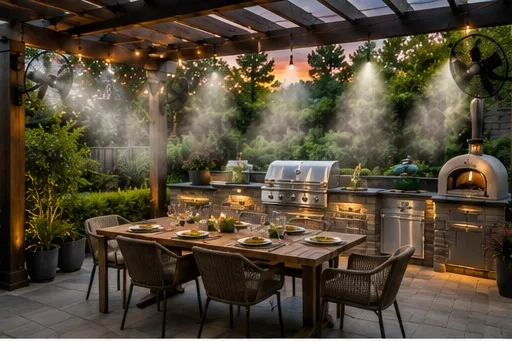
A quality misting system uses pressurized water to spray ultra-fine droplets into the air. As those droplets evaporate, they pull heat from the surrounding space. On a dry, hot day, you can drop the temperature by 15-20 degrees Fahrenheit in your immediate area. That's real cooling, fast.
Misting works best when you pair it with air movement (more on that in a second). The breeze helps evaporation happen faster and spreads that cool air around.
There are a few styles: overhead misting lines that attach to a pergola, handheld misting fans, and high-pressure systems that create an ultra-fine mist you barely feel until the cooling kicks in. If you're serious about transforming your outdoor space, Misting Wizards specializes in custom misting setups that blend seamlessly into your patio design.
Fans: Your Partner in Crime
A powerful outdoor fan alone won't cool you down—it just moves hot air around. But combine a fan with a misting system? Now you're cooking.
The fan accelerates evaporation and pushes that cooled air across your entire patio. Without a fan, the cool mist tends to hang in one spot. With a fan, you get consistent comfort across a larger area.
Misting fans are the sweet spot here. They handle both the mist and the air circulation in one unit. They're also more elegant than setting up separate fans and misting lines.
Strategic Shade: The Foundation Layer
Before you buy cooling equipment, start with shade. This is the foundation of any outdoor cooling strategy.
Large shade trees planted around your home and patio lower the ambient temperature significantly. We're talking measurable differences—your patio can be 10-15 degrees cooler under a mature tree compared to full sun. Trees are also permanent, free after the initial planting, and they look amazing.
If you don't have mature trees yet, grow them. Plant larger species now and you'll thank yourself in five years. In the meantime, consider shade structures like pergolas, shade cloths, or retractable awnings.
Your pergola shouldn't just look good—it should work hard. A well-designed pergola with partial shade (not total blockage) allows airflow while reducing direct sun exposure. Pair that with climbing vines and you've got natural cooling plus aesthetics.
Landscaping for Temperature Control
This is where "thermal garden design" comes in—a 2026 trend that's basically strategic landscaping to fight heat.
Replace any decorative rock or gravel around your patio with organic mulch. Rocks absorb and radiate heat back at you all day. Mulch stays cooler and doesn't reflect heat into your space. That one switch makes a real difference.
Add ground covers and shrubs around your patio perimeter. Vegetation absorbs heat and increases cooling through evapotranspiration (basically, plants release water that cools the air). More plants = cooler surroundings.
Think of your landscape as a cooling system. Every leaf contributes to temperature reduction.
Combining Solutions for Maximum Comfort
Here's the honest approach: relying on just one cooling method leaves you sweating.
Your best bet is layering: start with shade (trees, pergola), add misting capability, throw in a fan for air movement, and upgrade your landscape with cooling plants. When the heat hits, you've got multiple systems working together.
In dry climates, a misting system plus a fan plus shade gets you 80% of the way there. In humid climates, focus on shade, airflow, and any breeze you can capture—misting helps but won't perform like it does in Arizona.
If you're building a custom outdoor space from scratch, Misting Wizards designs integrated cooling solutions that include pergolas, misting systems, and fans all working as one cohesive system.
Real Talk: Budget and Installation
Outdoor cooling equipment ranges from affordable to premium depending on what you choose.
A basic misting fan might run $300-800. High-end misting systems with multiple zones and smart controls can go $2,000-5,000 or more. Shade structures vary wildly based on size and materials.
Here's what we recommend: invest in shade first (trees and a solid pergola). That's your permanent layer. Then add misting and fans based on your budget. You can always expand later.
Professional installation matters, especially for pressurized misting systems. DIY is tempting, but improper installation means leaks, inefficient cooling, and wasted water. Get it right the first time.
Water Usage and Efficiency
People worry about water waste with misting systems, and that's fair.
Modern misting systems are actually pretty efficient. A typical overhead misting line uses less water than running a garden hose for 15 minutes. High-pressure systems use even less because they create finer droplets that evaporate faster.
If water conservation matters to you (and it should in hot climates), look for systems with smart timers and sensors. Run your mist during peak heat hours, not all day. That's where the real savings happen.
For a detailed breakdown of how different cooling technologies impact your water bill, check out EPA WaterSense resources on outdoor water efficiency.
Maintenance: Keeping Your System Running
Outdoor cooling systems need basic upkeep, especially in hot climates where dust and debris accumulate fast.
Misting nozzles clog if your water isn't filtered. Check them monthly during the cooling season. Fans need cleaning to run efficiently. Shade structures need occasional inspection for wear.
It's not complicated—just regular attention prevents big problems. Most systems have a 5-10 year lifespan if you maintain them properly.
Making Your Choice
Start with these questions: Is your climate dry or humid? How much space do you need to cool? What's your budget? Do you have existing shade or need to build it?
From there, the path gets clearer. Dry climate + large patio + decent budget = full misting system with pergola and fan setup. Humid climate + smaller space + tight budget = focus on shade and a single quality misting fan.
If you want a custom solution tailored to your specific climate and space, Misting Wizards builds integrated outdoor cooling systems that handle everything from design to installation.
Frequently Asked Questions
How much can a misting system actually cool your patio?
In dry climates, expect 15-20 degree temperature drops in the misted area. In humid climates, you'll see 5-10 degrees of cooling. The drier your climate, the more dramatic the effect. Air movement (via fans) amplifies this cooling by 20-30%.
Are misting systems expensive to run?
Not really. A typical misting system uses minimal water compared to irrigation or a garden hose. Running one for 3-4 hours during peak heat adds maybe $5-15 to your monthly water bill, depending on your local rates and system size.
Can you use a misting system in a humid climate?
Yes, but it's less effective than in dry climates. In humidity, focus on shade, airflow, and strategic misting during early morning or late evening when evaporation works better. Pair it with fans to keep air moving.
How long do outdoor cooling systems last?
Quality misting systems and fans typically last 7-10 years with basic maintenance (cleaning nozzles, checking for leaks, servicing fans). Shade structures like pergolas last 15+ years depending on materials. Replacing components is usually cheaper than replacing the whole system.